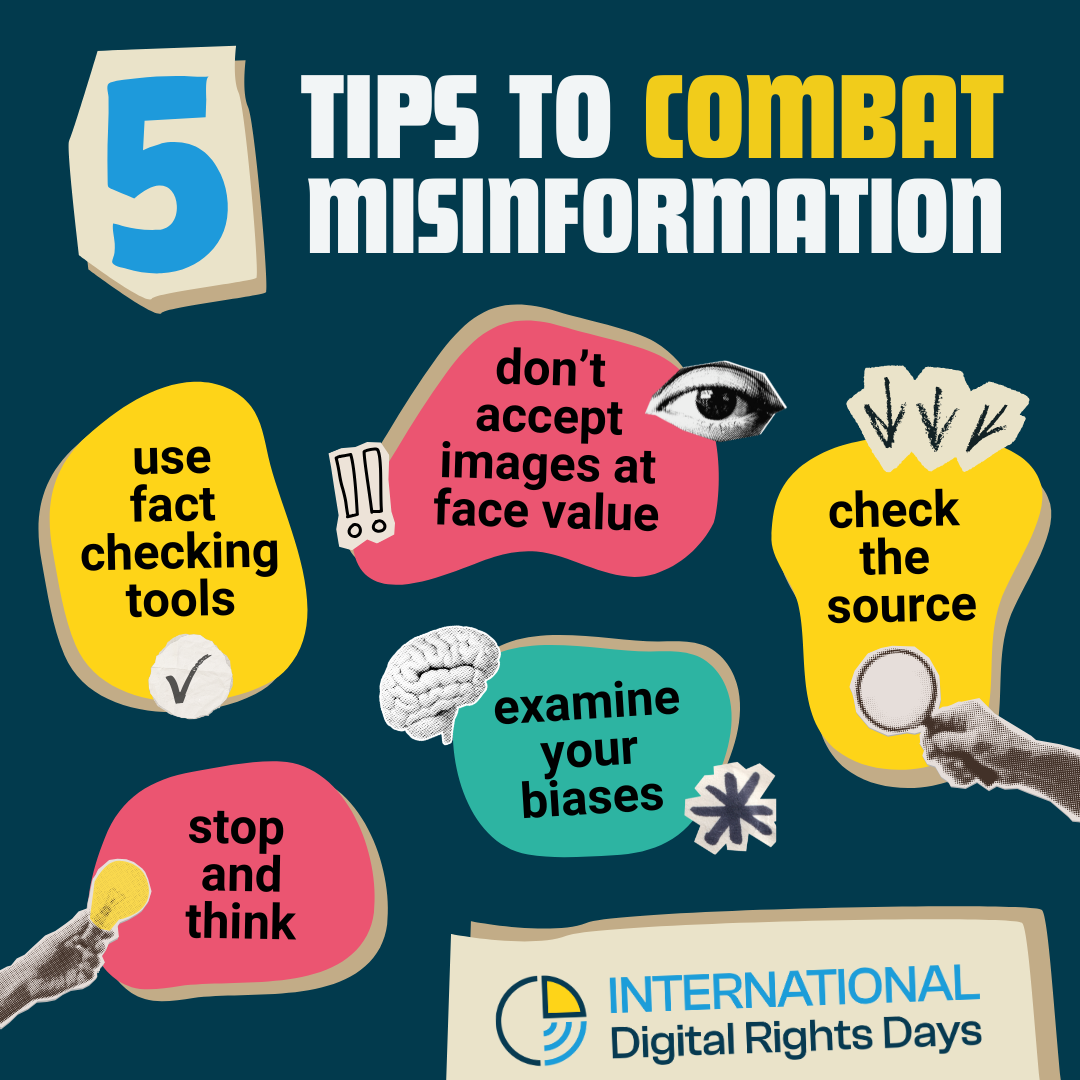
5 Tips To Combat Misinformation
What have you stumbled across on the Internet today?
Maybe you’ve laughed at an eviscerating Youtube takedown of the seventeenth entry in a major superhero franchise. Perhaps you’ve shared a viral post here on LinkedIn, perfectly articulating thoughts you’ve struggled to express. You might have fallen down a social media rabbit hole and found yourself two years deep into your friend’s second cousin’s Facebook feed.
(We’ve all done it).
Opinions and outrage.
Omnipresent cat pictures.
And a sleepless, persistent cycle of news, packaged in memes, videos, artwork and impassioned posts.
When we absent-mindedly scroll through our feeds, can we trust what we see? Do we always think to check?
Disinformation and misinformation are endemic online. But when we’re absent-mindedly scrolling through our feeds, it’s easy to push a critical mindset to one side.
Even when we’re consciously discerning, it’s not difficult to stumble across misleading content. Step online and you’ll be confronted with a barrage of misinformation: half-truths masquerading as unequivocal facts, obfuscation and misrepresentation, propaganda and malicious lies. Fake news is big business, and with the rise of AI, it has become increasingly difficult to tell what is real and what is not.
Misinformation spreads quickly and can have disastrous socioeconomic, political, and individual consequences.
A Glaswegian children’s event achieved viral infamy after the Roald Dahl inspired “Chocolate Experience” failed to live up to the promises of AI-generated advertisements. Instead of a candy-drenched dreamscape featuring six-foot lollipops, families queued to enter a grey, sparsely decorated, and distinctly mundane warehouse. The disappointment was so profound that police were eventually called to the site, as melancholy Oompa Loompas desperately rationed a dwindling supply of jellybeans.
The spread of false information can also have more serious repercussions. During the pandemic, online content that cast doubt the safety of vaccines led to a sustained decline in adoption rates. Medical services world-wide are still grappling with the consequences: in 2024, the World Health Organisation reported a 45-fold increase in measles cases across Europe.
Misinformation can also erupt in pockets of real-world violence. When a wildfire of misinformation streaked across UK media sites last year, several police services – including Merseyside, Essex and Greater Manchester – issued warnings against the impact of false claims in fuelling escalating disorder.
Fake news can ensnare anyone, irrespective of age, background, or political alignment. Contrary to popular belief, avid readers of fake news do not fit a singular demographic profile. Research has consistently debunked the stereotype of the poor or uneducated consumer. In fact, readers tend to average slightly higher education levels than the general population.
Think back on the stories you’ve dropped in the family group chat or shared on social media. Is it possible you’ve never been fooled, even momentarily?
Over half of people admit falling for fake news at least once, so if you’ve ever been deceived, you’re part of an unhappy majority.
Digital literacy has never been more important. Misinformation is nothing new, but the internet has enabled false claims to spread faster and more broadly. As everyday activities, media, and essential services move to digital platforms – and we spend more time online – we are more likely to encounter false claims, deep fakes, half-truths, and AI-generated content. Strategies that help us to parse credible stories from the milieu are now vital skills for anyone engaging online.
What actions can we take as individuals to combat the spread and protect ourselves?
At Manchester’s Digital Strategy, we believe that everyone should have access to the digital skills needed to navigate the online world.
Here we’ve collated some of the best tips, advice, and resources to help you separate fact from fiction.
Stop and Think
Pause before you hit that share button!
If you’re scrolling through your newsfeed while watching TV or eating your tea, it’s likely you aren’t entirely focused on the information you’re reading. With so much competition for our attention, it’s easy to share content without considering where it’s come from.
It might sound simple, but slowing down how quickly we consume online content can be a powerful tactic in halting the spread of misinformation.
Taking a moment to pause can help us to process information more critically, consider the potential impact of the content on the people it’s shared with, and investigate when things don’t look quite right.
Check the Source
We’ll confess: it feels good to be right.
Cognitive biases mean that we’re more likely to accept content at face value if it upholds our existing views and reject information that contradicts them. Uncritical acceptance of content that seems to support our view of the world can make us vulnerable to inadvertently spreading misinformation.
Sharing content that justifies our own beliefs can be hugely satisfying – and all too tempting to embrace.
Recognising how our own biases might affect our judgement can help us to question the content we encounter more thoughtfully. Seeking out information from a diverse range of sources and applying an equally critical mindset to content that both aligns and challenges our beliefs can help build in guardrails against confirmation bias.
And when your argument can’t be undermined by a cursory Google, being ‘right’ feels even better.
Examine Your Biases
Not all sources are created equal.
Don your detective hat and investigate who is behind the content, and how it has been shared. Be sceptical of posts without an easily identifiable author and do some digging on those that you’re not familiar with. Consider the biases authors might hold, and the ways in which they could benefit from the spread of content.
With the amount of information being shared, conducting background checks on every source could put you on the path towards an extended disappearance into the internet abyss. Consider curating a collection of trusted outlets – or using a dedicated news tool – to save your sanity and allow professionals to take on the task of vetting content on your behalf.
News agencies, with wide networks rigorous editorial guidelines, tend to be more consistently reliable than independent sources. Even with platforms you know and trust, it’s a good idea to check if the story has appeared in other places. Remember that no source is immune to mistakes!
Don’t Accept Images at Face Value
Humans are easily fooled by photo manipulation. In fact, research has revealed that we’re only able to detect digital trickery around 50% of the time.
With the advent of AI image generation tools, it’s become even harder to tell what’s real and what isn’t. Be on the look-out for warning signs of manipulation or AI, including stray pixels, odd distortions, and a suspicious number of surplus fingers. The Guardian has a useful guide outlining some of the most common issues.
Even when images are real, they may have be divorced from their original context. A photograph could be many years out of date, or captured at a different location than what is stated.
If in doubt, a reverse image search can help you uncover the original source of the picture under scrutiny and reveal other places it on the internet where it might exist.
Use Fact-Checking Tools
Combatting misinformation can be daunting. Luckily, there’s no need to go it alone.
Most social media sites have their own fact-checking tools. Due to the sheer volume of content, they’re not always able to capture every suspicious post, but keeping an eye out for content warnings can alert you to issues you might otherwise scroll past.
Fact-checking sites such as Snopes, PolitiFact and the Washing Post Fact Checker can quickly provide reliable information on commonly shared stories, while American non-profit RAND has curated a comprehensive list of tools to help combat disinformation on the web.
Championing digital literacy means empowering ourselves and others to critically interrogate the information we see online. No individual has the power to halt the spread of fake news, but together, we can have a tremendous impact in mitigating its effects.
This article was written for International Digital Rights Days 2025, a global campaign by the Cities Coalition of Digital Rights. Highlighting 5 key principles to define the future of digital rights, the campaign aims to inspire action to safeguard human rights online for future generations.
If you’d like to find out more about Digital Rights, head over to our 2024 blog, where we unpick the complexities of the term 'digital rights', and share our thoughts on what they should encompass.